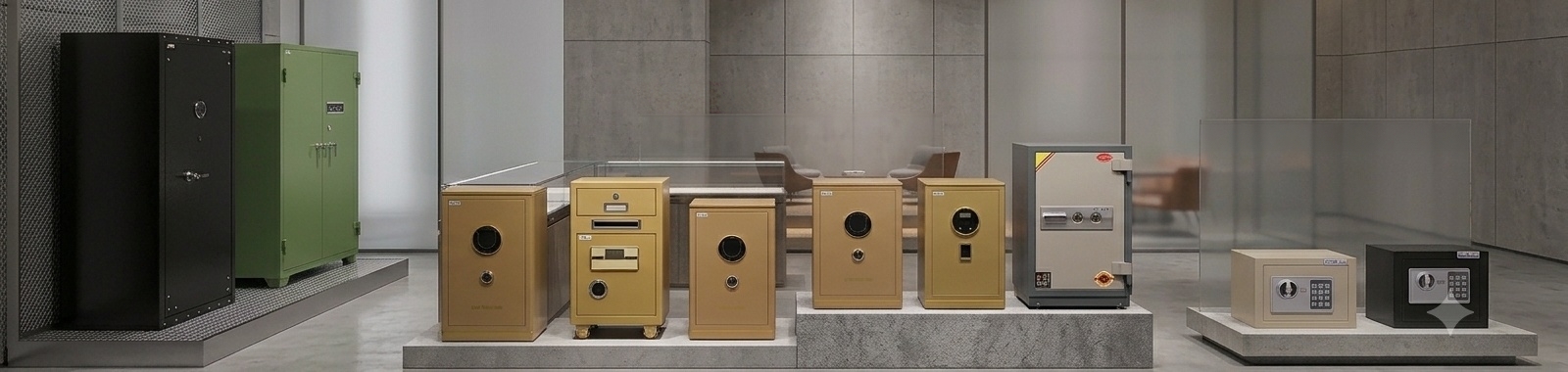
Commercial enterprises—ranging from multi-unit convenience store chains and gas stations to jewelry retailers, and regional bank branches—operate under risk profiles entirely different from residential households. Commercial environments face internal employee shrinkage, armed robbery threats, high-frequency access cycles, and round-the-clock physical access challenges.
For commercial security distributors and facility procurement managers, selecting high-capacity steel safes requires a rigorous focus on attack-resistant engineering, administrative multi-user access control, and depository mechanics. Sourcing commercial safes that fail to meet physical structural thresholds exposes clients to catastrophic burglary loss and voided insurance claims.
1. Structural Fortification: Resisting Concentrated Tool and Thermal Attacks
Unlike standard residential storage safe boxes, commercial safes are engineered to withstand systematic attacks from power drills, high-speed cutoff wheels, pry bars, and sledgehammers.
Multi-Layer Composite Walls: Premium commercial models utilize continuous seam-welded inner and outer cold-rolled steel plates with dense aggregate infill. This composite sandwich structure dulls cutting blades, dissipates torch heat, and absorbs impact energy from heavy demolition hammers.
Anti-Drill Hardplate Integration: A minimum 6 mm to 10 mm case-hardened steel armor plate must shield the locking mechanism, active boltwork linkages, and relocking devices. This prevents high-speed carbide from punching access holes to trip lock levers.
Relocking Devices (Passive and Active Relockers): In high-security commercial steel cabinets, secondary relockers are installed behind the main armor plate. If an attacker punches the primary electronic lock cylinder through the door using a heavy sledgehammer and punch pin, spring-loaded glass-plate or mechanical link relockers fire auxiliary solid deadbolts into structural pockets along the frame. Once tripped, the safe remains deadlocked even if the primary electronic or dial lock is completely destroyed.
2. Multi-Directional Active Boltwork and Frame Engagement
Commercial security hinges function purely as pivot points; they must provide zero defensive capability. When closed, the safe door should form an integral, interlocking structural unit with the cabinet body.
Importers must verify active boltwork specifications across multiple axes. Look for safes featuring four-way engagement: active horizontal locking bolts extending into both side frames, alongside active vertical bolts driving into the top header and bottom door threshold. Bolt diameters in this tier should measure no less than 28 mm to 36 mm in solid high-tensile steel, extending at least 25 mm deep into the frame chambers.
For superior door retention, specify an integrated full-length solid steel dead-bar along the entire hinge side. If thieves cut off the external hinges entirely with an oxy-acetylene torch or demo saw, the dead-bar keeps the door firmly locked in place, preventing extraction.
3. Depository Mechanisms: Cash Handling and Internal Loss Prevention
Retail operations, restaurant franchises, and fuel stations handle high volumes of cash across multiple shift rotations. Commercial depository drop safes (featuring front-loading hoppers or drop drawers) allow employees to deposit cash envelopes and shift tills into a locked lower vault without accessing previous deposits or knowing the primary safe combination.
Anti-Fish Baffle Engineering: The critical vulnerability in depository units is the "fishing" attack, where thieves use wires, weighted cords, or flexible tape hooks to extract envelopes back through the drop hopper. Quality commercial drop safes integrate interlocking sawtooth baffles: when the drop door is opened, the interior steel baffle swings shut to completely seal off the lower chamber, dropping the contents only when the exterior flap is fully closed.
Dual-Custody Lock Options: Cash drops require accountability. Sourcing dual-key systems or dual-credential electronic lockpads ensures that two designated managers—or an armored cash courier and a store manager—must authenticate simultaneously before the cash collection door unlocks.
4. Enterprise Audit Trails and User Permission Matrices
Standard consumer safes that support only one or two user codes are unsuitable for commercial operations. Commercial installations require scalable, multi-credential access oversight.
Individual PIN Assignment: Commercial lock platforms should support from 30 to 99 unique user PIN codes with individualized security tiers (Operator, Supervisor, Master Administrator).
5. OEM Scalability and Contract Bidding Support
Commercial safe procurement cycles frequently run through architectural specifications, bank equipment tenders, and corporate retail rollouts. Distributing stock catalog items leaves suppliers vulnerable to price gouging and specification changes.
Direct factory partnerships provide crucial advantages: custom interior configurations (such as independently locked manager lockers, pull-out heavy-load cashier drawer slides, and built-in anti-static coin racks) can be engineered in CAD within 48 hours. By working directly with an advanced manufacturing facility featuring automated robotic production lines and ISO9001/ISO14001 compliance, distributors secure repeatable product consistency, predictable lead times, and aggressive container-load pricing.

 English
 Português
 العربية