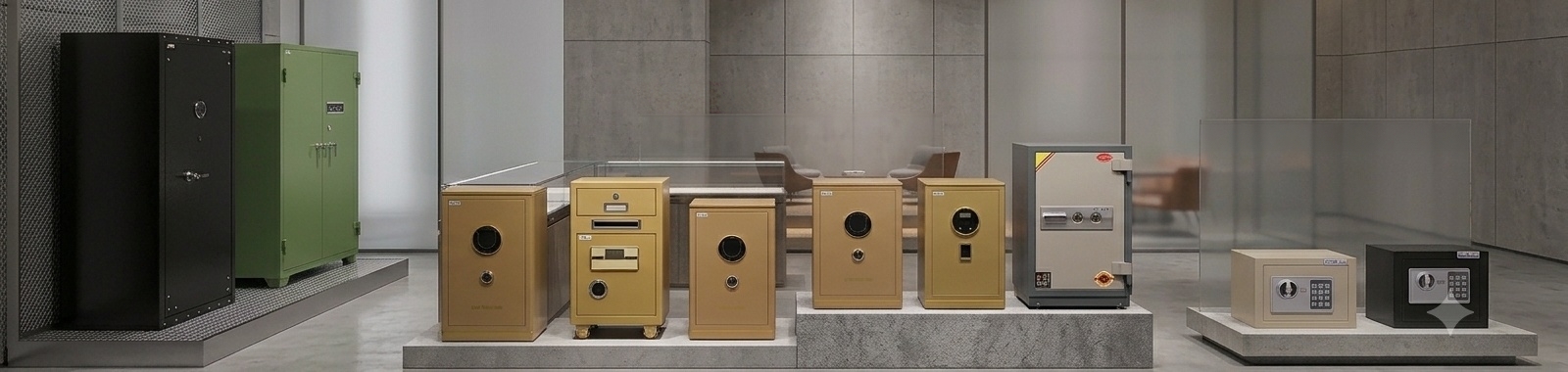
In commercial office spaces, industrial facilities, and legal practices, physical theft is only one operational hazard. Thermal destruction from fires represents an irreversible risk to physical contracts, regulatory documents, vehicle titles, shareholder deeds, and critical transaction cash. Standard steel safes excel at brute-force anti-theft defense, but their high-tensile steel walls conduct intense furnace heat inward within minutes, carbonizing paper assets and melting digital media without external flames ever penetrating the interior.
For B2B distributors and enterprise supply contractors, stocking true fireproof safes requires understanding composite refractory insulations, door expansion seal chemistry, and third-party laboratory temperature thresholds. Supplying an uncertified storage cabinet as a fireproof safe exposes your business to catastrophic product liability claims.
1. The Physics of Paper Combustion and Internal Chamber Temperature
Paper begins to yellow, scorch, and degrade at approximately 150°C (302°F), and experiences full spontaneous combustion at roughly 232°C (451°F). Digital data carriers (magnetic tape, USB flash drives, backup hard drives) degrade even sooner, corrupting at internal temperatures above 52°C (125°F) with high relative humidity.
True laboratory fire ratings require the internal storage chamber of the safe to remain strictly below 177°C (350°F) throughout the entire duration of the specified thermal test cycle:
- Class 350 1-Hour Fire Endurance: Safe is subjected to continuous furnace temperatures reaching 927°C (1700°F) for a full 60 minutes. The internal temperature must never cross the 177°C line.
- Class 350 2-Hour Fire Endurance: Safe endures extreme industrial furnace heat up to 1010°C (1850°F) for 120 minutes. The internal core must sustain thermal insulation integrity without cracking or structural collapse.
2. Composite Wall Architecture: Aerated Concrete vs. Drywall Fillers
The secret behind certified fireproofing lies between the inner and outer steel skins. Wholesale buyers must scrutinize the fill material specified by the manufacturing plant.
- Substandard Drywall Fillers: Low-end manufacturers pack standard gypsum board sheets between thin steel casings. Gypsum board contains minor amounts of bound water, but under sustained furnace heat, it quickly dehydrates, crumbles, and forms hollow interior air pockets that allow radiant heat to penetrate the inner chamber.
- Engineered Refractory Composites: Professional OEM fire safe factories inject specialized aerated refractory composite slurry into the double-walled steel chassis under high-vibration compaction. This dense matrix combines fine-aggregate alumina cements, vermiculite micro-insulators, and bound moisture hydration molecules.
3. Stepped Door Rebates
Multi-Tiered Stepped Jamb Profiles: The perimeter of the safe door uses a multi-bend "refrigerator-style" stepped rebate design. This stepped labyrinth forces penetrating hot gases and flames to navigate multiple 90-degree thermal turns, drastically dampening convective heat transfer.
4. Locking Logic and Key Configurations
Selecting hardware configurations for fireproof storage units requires balancing fire insulation continuity with everyday usability.
Key-Only vs. Electronic Keypad Access: Mechanical dual-key systems eliminate electronic logic boards that can melt during prolonged thermal exposure, making them popular for archival compliance. However, digital keypad and biometric systems paired with high-security mechanical bypass cylinders offer preferred day-to-day convenience in active corporate offices.
Expand your B2B distribution catalog with laboratory-tested fire resistance. Contact our engineering team to review certified fire test reports, evaluate composite cross-sections, and receive factory-direct container quotations.

 English
 Português
 العربية