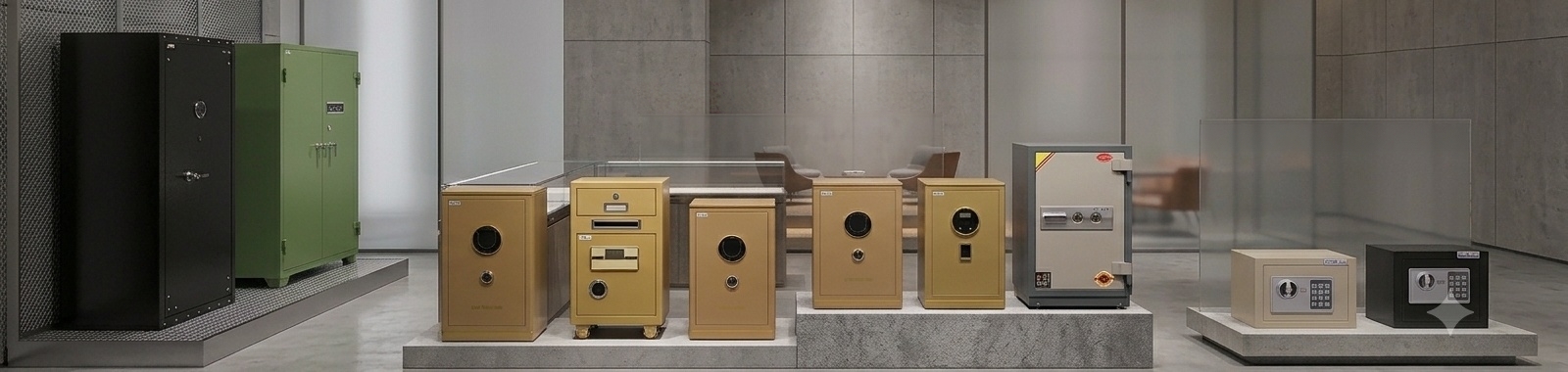
In high-volume retail environments—such as 24-hour convenience store chains, fuel stations, quick-service restaurant franchises, and supermarket dispensaries—loss prevention teams face a threat that perimeter alarms and external surveillance cannot fully solve: internal shrinkage. Retail asset loss resulting from employee theft, fraudulent till reconciliation, and unauthorized cash drawer access accounts for tens of billions of dollars in enterprise losses globally every year.
Standard commercial storage containers operated by single-user PIN codes or single-key locks create vulnerabilities. An employee working late shifts can be coerced during an armed robbery, or an individual custodian can quietly skim register floats and shift deposits without immediate detection.
To eliminate single-point operational vulnerabilities, enterprise loss prevention frameworks rely on the Two-Person Rule enforced through dual-control locking architecture. By requiring two independent credentials presented simultaneously to access safe contents, commercial dual-control safes convert physical cash storage into an accountable governance system.
1. The Two-Person Rule: Operational Mechanics of Dual Custody
The Two-Person Rule dictates that no single employee possesses the physical or digital credentials needed to open the cash repository alone. Access requires two authorized individuals—such as a shift lead and an assistant manager, or a store manager and an armored courier technician—to unlock the cabinet simultaneously.
Commercial dual-control safe architecture delivers this segregation across three hardware setups:
A. Dual Mechanical Key Systems (Key + Key)
In traditional retail and route-serviced cash safes, the door uses two distinct lock cylinders located adjacent to one another.
- The Manager Key (Operator Key): Held strictly by on-site store supervisory personnel.
- The Guard Key (Collector Key): Held exclusively by contracted CIT (Cash-in-Transit) couriers or regional loss prevention audit staff.
- Neither key can retract the boltwork independently. The safe's internal mechanical linkage requires the collector key to rotate first, aligning an internal tumbler gate that permits the manager key to actuate the bolt carriage.
B. Electronic Hybrid Dual Custody (Digital PIN + Manager Key)
The most common configuration for multi-shift retail operations combines an electronic digital PIN keypad with an independent high-security physical key lock. To open the safe:
- The shift supervisor inputs an authorized numerical PIN (or validates a semiconductor biometric fingerprint scan) on the primary panel.
- The system verifies the digital credential and unlatches the internal electronic solenoid or stepper motor.
- The store manager must then insert and turn their high-security physical control key within a 15-to-30-second authorization window to retract the heavy solid steel deadbolts.
C. Dual-Credential Electronic Matrix (Dual PIN / Dual Biometrics)
Advanced digital controllers eliminate physical brass keys, avoiding re-keying costs if keys are misplaced. The safe's firmware is set to Dual-Authority Mode: unlocking requires two distinct registered user credentials entered within 60 seconds of each other (e.g., Cashier PIN followed by Store Manager Biometric Scan).
2. Depository Architecture: Segregating Shift Cash Drops from Safe Reserves
A fundamental requirement of retail cash management is that shift cashiers must make continuous cash envelope deposits without viewing existing contents or accessing the main storage chamber.
Commercial dual-control safes utilize a two-tier configuration: a depository drop safe featuring an independent upper deposit chamber and a dual-custody lower storage safe.
Anti-Fish Sawtooth Baffles
The primary mechanical vulnerability of cash drop hoppers is "fishing"—using flexible wires, weighted cords, or adhesive tape hooks inserted through the drop slot to pull deposited cash envelopes out.
Commercial depository units use continuous laser-cut sawtooth baffles. When the front drop hopper or rotary drum is pulled open, the internal steel baffle swings down, completely closing off access to the lower safe chamber. When the drawer is pushed shut, the baffle opens, allowing the envelope to drop into the lower safe. If a pry tool or fishing wire is pushed into the slot while open, the reverse-angled teeth snare the line and prevent withdrawal.
Multi-Tier Compartmentalization
Upright commercial safes frequently incorporate an independently locked internal steel drawer or upper manager box. This setup allows cashiers to access operational register change floats during shifts while keeping high-denomination bill envelopes, corporate signature stamps, and master vehicle deeds locked behind the lower dual-control door.
3. Physical Security Metallurgy and Locking Linkages
A dual-custody lock configuration is only as effective as the physical steel enclosure housing it. Dual-control retail safes are built with heavy structural defense to withstand brute-force attacks during solo overnight shifts.
- Micro-Seam Tolerances: High-precision CNC fiber lasers cut the safe door directly out of the front frame plate, maintaining door seam gaps under 0.8 mm. This micro-gap engineering deprives pry bars, screwdrivers, and chisels of mechanical leverage.
- Multi-Directional Live-Locking Bolts: Rotating the handle drives solid steel bolts (28 mm to 32 mm in diameter) deep into top, bottom, and lateral frame channels.
- Internal Anti-Pry Dead-Bars: Along the internal hinge side, a continuous vertical solid steel flange locks into the safe body. If an intruder grinds off the external hinges, the interlocking dead-bar prevents the door from being extracted.
- Auxiliary Mechanical Relockers: Mounted behind the primary manganese hardplate is a spring-loaded passive relocking device. If an attacker uses a heavy punch pin and hammer to drive the lock cylinder through the door, the relocker trips, driving independent hardened steel pins into structural pockets to keep the safe deadlocked.
4. Smart Firmware: Audit Trails, Time Delays, and Duress Protocols
Modern retail security integrates mechanical strength with real-time electronic governance.
- Scalable Multi-User Management: Commercial controllers support 30 to 99 unique user PIN codes with granular permission levels (Operator, Shift Supervisor, Master Manager).
- Forensic Event Logging: The onboard microprocessor logs hundreds of timestamped events in non-volatile flash ROM. When cash balances do not match, loss prevention managers can export event records via a USB data interface to identify which employees opened the safe and when.
- Programmable Time Delays (1 to 99 Minutes): Integrating an automated countdown delay between code entry and bolt retraction deters opportunistic robbery. Burglars targeting retail stores avoid waiting on-site for a 15-minute timer to elapse.
- Silent Duress Emergency Relays: If an employee is coerced at gunpoint to open the safe, entering a designated duress code unlocks the safe normally while silently triggering an open-collector relay tied to the building's central alarm panel or video monitoring station.
5. Sourcing Direct: The B2B Manufacturing Advantage
Sourcing dual-control commercial safes directly from an experienced manufacturing plant provides crucial advantages for retail rollouts, commercial locksmiths, and security distributors:
- Custom Depository Engineering: Tailor front drop-slot openings, rotary hopper drums, or rear-wall drop chutes to integrate with your clients' architectural counters and cashier setups.
- Flexible Locking Configurations: Specify custom combinations of dual-key systems, electronic keypad arrays, or live-dermal semiconductor biometric scanners.
- Anchoring Hardware & High-Tensile Bolts: Every safe comes pre-drilled with factory mounting holes through the base and rear panel, complete with 8.8-grade concrete expansion bolts to ensure small and medium depository safes cannot be hauled away.
- Reinforced Sea-Freight Packaging: Packed in heavy five-ply corrugated cartons reinforced with high-density foam edge protectors, ensuring shipments arrive scratch-free and ready for installation.
Protect your commercial clients from internal shrinkage and opportunistic theft. Contact our commercial engineering division to review technical drawings, discuss low-MOQ trial orders, and secure direct-factory container pricing.

 English
 Português
 العربية