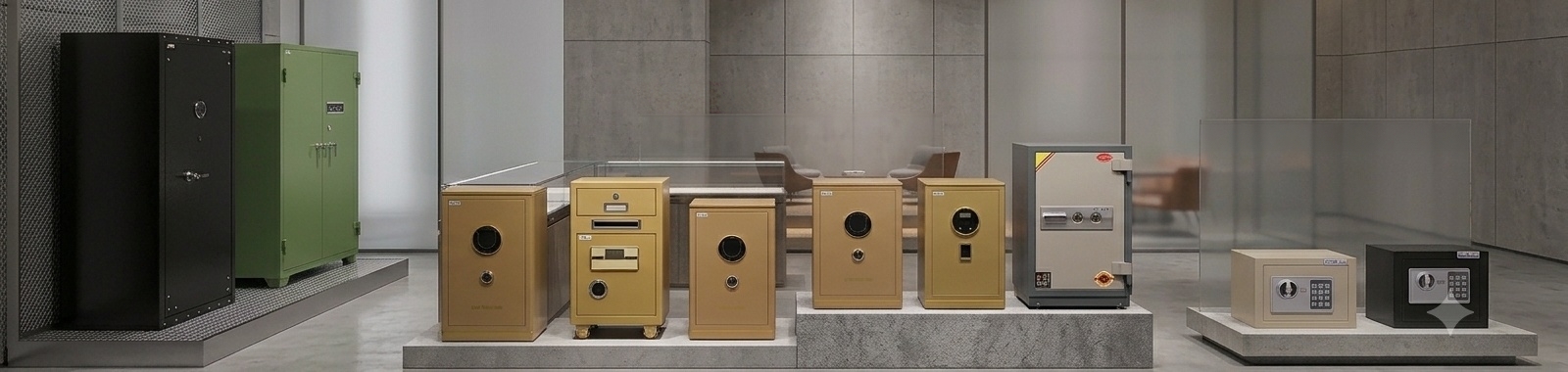
When physical assets exceed certain commercial valuation thresholds—such as in diamond trading rooms, luxury watch retailers, bullion exchanges, and retail cash vaults—standard consumer safes are insufficient. High-risk assets require certified defense against determined, prolonged physical attacks conducted by experienced criminals equipped with high-speed carbide drill bits, diamond cutting wheels, heavy sledgehammers, and hydraulic prying tools.
For security distributors and institutional procurement agents, assessing anti-theft safes requires looking beyond cosmetic powder coatings to inspect interior armor metallurgy, locking transmission linkages, and mechanical relocker defense arrays.
1. Structural Armor: Monolithic Cold-Rolled Plates and Composite Layers
- Physical anti-burglary defense begins with the raw tensile strength and ductile toughness of the outer enclosure.
- Monolithic Steel Door Slabs: True anti-theft commercial safes feature doors machined from solid steel slabs ranging from 8 mm to 15 mm or thicker, completely abandoning hollow folded-sheet construction. Monolithic plates prevent cutting tools from easily biting into hollow interior framing.
- Low-Carbon Alloy Steel Formulations: Leading factories utilize high-density low-carbon structural alloy steel. This specialized metallurgical composition delivers an ideal balance between high yield hardness and structural ductility: when subjected to repeated impacts from heavy sledgehammers, the steel absorbs and dissipates impact energy without cracking or developing embrittlement fractures.
- Stainless Steel Armor Cladding: Premium bullion and jewelry safes incorporate external stainless steel cladding over the alloy chassis. Stainless alloys exhibit high work-hardening properties under friction; when struck by abrasive cutoff wheels or industrial drills, the alloy hardens rapidly, quickly wearing down cutting edges.
2. Laser Micro-Gap Tolerances and Interlocking Rebates
The primary target for forced physical entry remains the door seam. If an attacker can slide a wedge, crowbar, or hydraulic spreader claw into the door seam, mechanical leverage can deform the frame.
To eliminate this vulnerability:
- Sub-Millimeter CNC Laser Cutting: Advanced manufacturing plants utilize multi-axis CNC fiber laser cutting systems to cut the safe door directly out of the front wall plate in a single continuous operation. This process keeps clearance around the door perimeter below 0.5 mm.
- Flush Planar Profiles: The door sits flush with the exterior bezel, eliminating protruding lips, raised door edges, or exposed trim that could serve as fulcrums for heavy pry tools.
- Multi-Bend Stepped Rebates: The safe's inner door jamb incorporates multi-layered interlocking stepped bends. Even if extreme force is applied to the seam, the interlocking bends stop mechanical tools from reaching internal locking bolts or wiring.
3. Penetration Defenses: Manganese Hardplates
Savvy commercial burglars rarely try to pry open fortified doors; they target the internal locking cylinder, stepper motor, or locking cam with heavy carbide drill bits to trip the bolts manually.
High-Manganese Drill-Resistant Hardplates: The critical locking mechanism, gearbox, and boltwork linkages are completely enclosed behind case-hardened high-manganese steel armor plates (6 mm to 10 mm thick). When high-speed carbide or cobalt drill bits strike this material, the alloy work-hardens instantly, spinning and dulling the drill flutes.
4. Omnidirectional Boltwork and Continuous Hinge Dead-Bars
Hinges are structural pivot points meant for daily opening; they should never serve as a safe's sole defensive barrier.
Fortified security safes deploy heavy-duty four-way active locking boltwork:
- Multi-Axis Solid Steel Locking Bolts: Thick cylindrical bolts—measuring 28 mm to 36 mm in diameter—drive simultaneously into the top header, the bottom floor sill, and the side jambs. Bolt penetration depth must exceed 25 mm to 30 mm into reinforced frame pockets to maintain holding power during severe frame flex.
- Fixed Continuous Rear Dead-Bars: Along the entire hinge side of the door, a solid steel interlocking flange runs vertically from top to bottom. If an intruder uses an angle grinder or oxy-acetylene torch to completely shear off the external door hinges, the internal dead-bar keeps the door locked in place, stopping extraction.
5. High-Security Cylinders and Multi-Modal IoT Safeguards
Modern commercial defense combines mechanical strength with smart administrative controls.
- Certified Grade-C Key Cylinders: Backup lockways should utilize anti-pick, anti-drill Grade-C brass or stainless steel key cylinders featuring double-bitted dimple profiles, snake-grooves, or magnetic track pins, resisting mechanical lock picks and tension wrenches.
- Dual-Custody Lock Formats: For environments requiring strict cash control, safes should require dual-credential authentication (e.g., electronic PIN plus mechanical manager key, or two distinct user fingerprints) to release the boltwork.
- IoT Tamper Telemetry: Onboard sensors tied to local Wi-Fi modules provide instant remote alerts. If the cabinet experiences unusual physical vibrations, heavy structural shock, repeated incorrect credential entries, or micro-switch frame displacement, it activates a 100+ dB local siren while sending an alert to designated security smartphones.
Elevate your enterprise security portfolio with engineered physical defense. Contact our technical sales team to review certified anti-burglary blueprints, discuss OEM branding specifications, and secure factory-direct wholesale pricing.

 English
 Português
 العربية