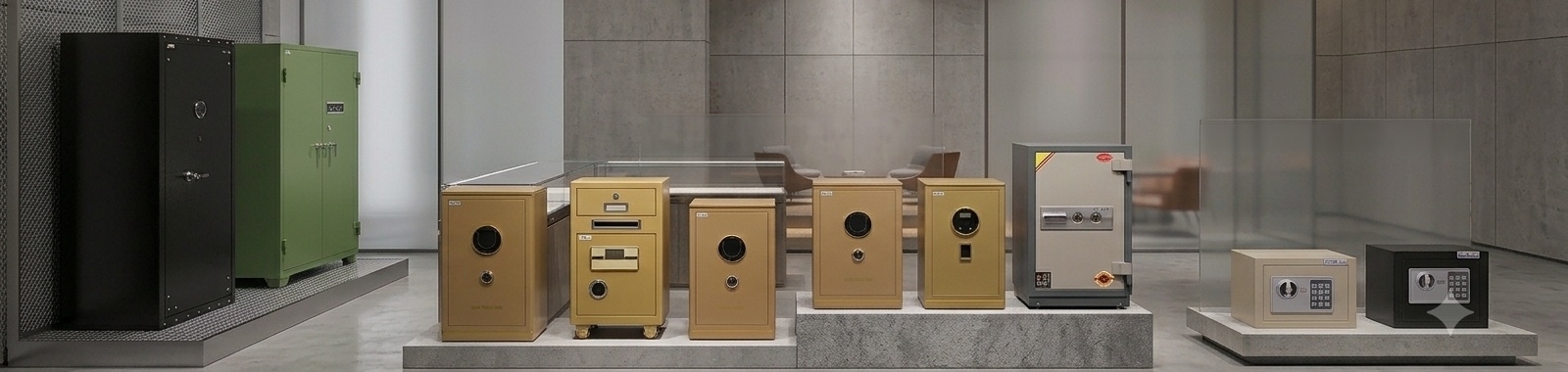
Electronic and smart biometric safes have become the dominant product line across global retail, hospitality, and residential security markets. End-users expect instant access via semiconductor fingerprint scanners and capacitive touch keypads. However, the most persistent challenge facing international distributors, e-commerce brands, and hardware retailers is post-sale warranty friction caused by electronic lockouts.
When consumer batteries drain inside a locked safe, or when transient power fluctuations wipe an internal micro-controller, frustrated users often assume the mechanism has failed permanently. This leads to product returns, negative marketplace reviews, and costly technical dispatch calls.
For overseas sourcing directors and security wholesalers, mitigating electronic lockouts requires examining the low-power logic boards, non-volatile EEPROM memory chips, and dual emergency bypass systems built into modern digital safes.
1. The Anatomy of Power Drainage: Quiescent Standby vs. Actuation Peaks
An electronic safe spends more than 99% of its operational lifecycle in idle standby mode. During this phase, the logic board monitors the sensor matrix for a waking touch or keypress. Battery depletion issues typically stem from poorly engineered idle circuitry rather than active motor usage.
Consumer-grade circuit boards often draw between 80 and 120 microamperes (µA) of continuous background current. Under these conditions, four standard AA alkaline batteries will deplete within three to four months, even if the safe door is opened only once or twice a week.
Commercial-grade safe micro-controllers are designed for ultra-low quiescent current, operating below 30 µA during standby. This architecture enables a standard battery pack to deliver 12 to 18 months of reliable service under normal daily cycling.
Actuation load management is equally important. When an authorized PIN or fingerprint is verified, driving the locking solenoid or motorized deadbolts creates an instantaneous current spike of 300 to 500 milliamperes (mA). If internal batteries have partially decayed, their internal resistance causes an immediate voltage sag during this motor pulse. A well-designed circuit board separates the logic processing rail from the motor power rail via a low-dropout (LDO) regulator and buffer capacitors, preventing the microprocessor from resetting during bolt retraction.
2. Safeguarding Access Credentials: The Role of Non-Volatile Memory
A common failure in budget electronics occurs when internal batteries drain to 0 volts. Volatile memory chips lose their data states when power is lost. If an electronic lock relies on volatile storage, an extended power outage resets the safe's micro-controller to factory default settings, or worse, locks out all registered administrator PINs and biometric profiles entirely.
Tier-1 security manufacturing resolves this by storing credentials on dedicated non-volatile memory components:
Electrically Erasable Programmable Read-Only Memory (EEPROM) and onboard flash ROM retain encoded credentials without needing a persistent trickle charge. Even if internal batteries remain dead for years inside a warehouse or locked closet, all administrative codes, secondary user combinations, and enrolled biometric templates remain intact. Once power is restored through external contacts, the safe verifies existing credentials without requiring a factory reset.
To defend against digital tampering, these memory chips use AES-128 or AES-256 encryption routines. Stored fingerprint data is converted into one-way mathematical ridge hashes rather than raw image files, preventing illicit reconstruction or logic tampering if the board is inspected.
3. Primary Emergency Access: External Power Injection
When internal batteries drop below operational thresholds, the safe must offer a non-destructive method to power the keypad without forcing the user to find tools or drill into the steel body.
Leading OEM factories integrate one of two external power bypass interfaces on the front lock housing:
The traditional interface uses a 9V external battery contact pad situated on the lower lip of the keypad bezel. The user presses a standard rectangular 9V alkaline battery against the positive and negative terminals, completing a circuit that powers the logic board and LED display. The user can then key in their valid PIN to retract the bolts normally.
Modern biometric units increasingly incorporate an external 5V USB-C auxiliary power port alongside or in place of the 9V terminals. By plugging in a portable smartphone power bank or wall adapter via a standard Type-C cable, the user energizes the sensor array immediately. The micro-controller boots within milliseconds, allowing biometric verification and access to the interior battery compartment.
4. Secondary Emergency Access: High-Security Mechanical Bypass
External power jump-starts resolve battery depletion, but they cannot bypass catastrophic electronic component failures, such as water damage, severe electrostatic discharge (ESD), or physical impact damage to the keypad. Every electronic safe must include an independent mechanical override key system.
A major sourcing pitfall is accepting cheap tubular wafer cam-locks as the emergency bypass mechanism. Inexpensive tubular locks can often be defeated in seconds using consumer lock-impression tools, compromising the safe's security rating.
High-security manufacturing integrates multi-axis mechanical cylinders hidden beneath a removable, magnetically aligned decorative faceplate or brand medallion:
- Double-Bitted Laser-Track Keys: These cylinders use dual-sided, undulating serpentine tracks that resist conventional single-pin picking tools.
- Disc-Detainer Mechanisms: Popular in industrial padlocks, disc-detainer keyways use rotating balance discs rather than spring-loaded pins. They cannot be defeated by standard bump keys or vibrating electric picks, and they provide reliable operation in dirty environments.
- Direct Mechanical Cam Linkage: The emergency keyway must engage the main bolt-carriage carriage directly, mechanically drawing back the deadbolts even if the internal solenoid or stepper motor is stuck or burned out.
5. Proactive Warning Telemetry: Preventing Lockouts Before They Occur
The most effective way to eliminate customer lockout disputes is by providing clear, early warning indicators when power reserves decline.
Commercial-grade safe firmware integrates a multi-tier battery telemetry protocol:
- Visual Warnings: When circuit voltage drops below 4.8V (on a nominal 6.0V system), the front display illuminates a dedicated low-battery icon or flashes red during each unlock cycle. This warning begins when approximately 15% to 20% of battery capacity remains, giving users several weeks to replace the cells.
- Acoustic Alerts: Alongside visual alerts, the internal piezo buzzer emits a distinct sequential beep sequence during door operation, alerting users who may not check the display.
- Lockout Penalty Protection: If an unauthorized person enters an incorrect PIN three times, the board initiates a five-minute penalty lockout accompanied by a high-decibel audible alarm. This firmware loop stops brute-force automated code entry while leaving the mechanical keyway available for immediate administrative intervention.
B2B Manufacturing Integration
Preventing safe lockouts requires robust electrical design, not just thicker steel. Sourcing directly from an established B2B safe manufacturing plant ensures that your products use low-quiescent micro-controllers, non-volatile EEPROM memory, certified ESD protection, and reliable mechanical overrides.
Our engineering team works closely with global distributors and retail brands to develop customized electronic and biometric safes. From tailored exterior power interfaces to branded firmware UI and drop-tested packaging, we supply certified, defect-free security products at direct-factory wholesale prices.

 English
 Português
 العربية