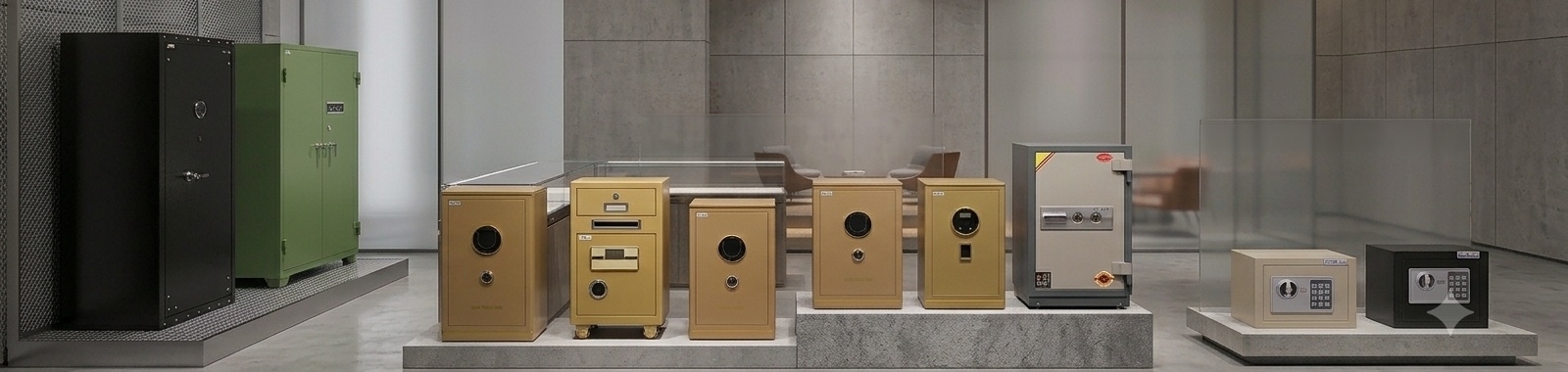
For residential security distributors, hardware retail chains, and multi-family housing procurement directors, assessing the physical security of a safe requires examining more than just locking pins and steel thickness. While consumers often evaluate safes based on keypad responsiveness, biometric recognition, or digital displays, professional burglars rarely waste valuable time attempting on-site lock picking or drilling during a home invasion.
Instead, retail crime statistics indicate that the overwhelming majority of residential burglaries exploit a basic physical vulnerability: whole-safe removal. Because compact home safes typically weigh between 10 kg and 35 kg, intruders can pry the unit loose with a standard crowbar and haul it off to breach at an off-site location with power cutting tools.
Offering genuinely protective residential units requires understanding structural anchoring mechanics. Sourcing mountable home safes equipped with reinforced pre-drilled apertures and heavy-duty concrete anchor hardware transforms a lightweight cabinet into an immovable physical barrier.
1. The Physics of Carry-Off Attacks: Shear vs. Tensile Forces
When an intruder uses a wrecking bar or pry tool against a secured residential safe, the anchoring interface experiences two distinct mechanical stresses: tensile pull-out force and lateral shear stress.
Tensile pull-out force occurs when leverage is applied beneath or behind the safe, pulling the mounting fastener straight out along its longitudinal axis. Lateral shear stress occurs when impact or leverage forces push sideways against the cabinet body, attempting to slice or snap the anchor bolt shaft at the floor line.
Unanchored or poorly mounted units fail within seconds under dynamic crowbar leverage. An 18-inch pry bar can easily exert over 400 kg of mechanical lifting force at the bolt head. If a safe is attached using standard wood screws or thin drywall anchors, the fasteners pull out immediately.
To resist sustained prying, the physical anchoring assembly must sustain at least 500 kg to 1,000 kg of combined tensile and shear resistance per anchoring point.
2. Base and Rear Plate Reinforcement: Preventing Bolt Pull-Through
A common structural failure in economy-grade residential safes is bolt-head pull-through. While the anchor bolt may remain anchored in the concrete subfloor, applying upward force on the safe causes the thin base sheet to deform and rip around the fastener head, releasing the entire cabinet.
Tier-1 OEM manufacturing resolves this issue through structural aperture reinforcement:
- Embossed Recessed Apertures: Rather than simple punched holes on flat sheet metal, mounting holes are stamped with deep recessed collar dimples. This geometric stamping increases localized rigidity and prevents the steel around the hole from flexing upward under load.
- Thickened Load-Spreading Washers: Sourcing specifications must include heavy cold-rolled steel backup plates or wide-diameter hardened fender washers. These plates spread the lifting force across a wider surface area of the safe floor, preventing the bolt head from punching through.
- Dual-Axis Anchoring Patterns: Premium mountable safes provide at least two pre-drilled anchor holes through the bottom floor plate and two through the solid rear backplate. Fastening the safe simultaneously to a concrete floor and a structural wall creates perpendicular anchoring axes, stopping horizontal leverage attacks completely.
3. Industrial Fastener Standards: Specifying Grade 8.8 Hardware
Supplying a solid steel safe with low-grade, generic carbon screws creates a weak point in the security chain. B2B importers must require factory accessory kits that include tested structural anchoring hardware:
- Grade 8.8 Concrete Expansion Wedge Bolts: Standard commercial installations require heavy-duty zinc-plated carbon steel wedge anchors. When tightened into a pre-drilled masonry hole, the expansion clip flares outward into the concrete, generating high holding friction. Grade 8.8 steel provides high tensile yield strength, preventing the bolt from snapping under sudden shock loads.
- Drop-In Internal Shield Anchors: For flush floor installations where bolts cannot protrude upwards, internal expansion shields allow high-tensile hex-head cap screws to tighten down directly onto the interior baseplate of the safe.
- Heavy-Duty Wood-Stud Lag Screws: Because North American and Australian residential construction relies heavily on timber framing, factory packages should include heavy hex-head lag bolts (minimum 8 mm diameter by 65 mm length) for securing rear plates directly into structural wooden studs.
4. Installation Substrates: Masonry Concrete vs. Wood Joists
Distributors and retail partners must educate installation crews on substrate limitations to avoid customer liability claims.
- Solid Concrete Slab (Optimal Security): Fastening directly into cured 25 MPa+ concrete subfloors delivers maximum anti-pry performance. Wedge anchors driven into concrete can resist well over 1,500 kg of pull-out force before failure.
- Wood Subfloors and Joists: Fastening into plywood subfloors alone provides limited pull-out defense. Installers must route lag bolts directly into structural floor joists or secure an under-floor steel backing plate beneath the floorboards to sandwich the timber frame securely.
- Closet and Cabinet Integration: When installing compact safes into wooden wardrobes or desks, anchor bolts should pass through the furniture base directly into the concrete or brick wall behind it. Anchoring only to thin particleboard furniture allows an intruder to rip the safe free using basic hand tools.
5. OEM Scalability: Custom Mounting Engineering for Enterprise Bids
When bidding on large multi-family housing developments, hotel renovations, or government contracts, standard consumer mounting patterns often fail to align with building blueprints.
Partnering directly with a source manufacturing plant allows commercial buyers to customize anchoring designs:
- Tailored Hole Patterns: Custom CNC laser-cutting programs can position mounting apertures at specific 16-inch or 12-inch center-to-center distances, matching regional stud framing standards in North American and European buildings.
- Internal Anti-Tamper Bolt Caps: Specialized lockable steel caps or rotating protective sleeves fit over internal bolt heads, stopping intruders from sawing or unscrewing the fasteners even if the outer door is partially compromised.
- Drop-Tested Packaging Integration: High-tensile anchor kits, masonry drill bits, and installation templates can be packed securely inside the safe's molded packaging, preventing internal transit scratches and ensuring units arrive ready for immediate installation.
Enhance your retail and commercial security catalog with reliably engineered mountable safes.

 English
 Português
 العربية